The magic of Classical Pilates Mat is not found in one exercise.
It is found in the relationship between every exercise: the traditional order, the precise repetitions, the breath, the rhythm, the transitions and the continuous connection to the powerhouse.
Classical Pilates Mat is not simply a collection of Pilates exercises performed one after another. It is an established and progressive movement system designed to educate the body and develop strength, stretch, control, concentration and physical intelligence.
The exercises are the vocabulary.
The order, rhythm, breath and transitions are the language.
At Body Maestro, we believe that understanding this language is essential for Pilates instructors who want to move beyond simply delivering exercises and begin teaching the Pilates method as one connected, whole-body system.
What Is Classical Pilates Mat?
Classical Pilates Mat is based on the original Matwork developed by Joseph Pilates and presented in his book, Return to Life Through Contrology.
Joseph Pilates called his method Contrology, describing a complete system designed to integrate the mind, body and spirit through purposeful movement.
The traditional Classical Pilates Mat repertoire includes the original 34 Mat exercises, but the method is not defined by the exercises alone.
What makes Classical Pilates Mat distinctive is the way the exercises are taught and connected through:
- An established order
- Specific repetition numbers
- Purposeful breathwork
- Changing rhythms
- Precise transitions
- Connection to the powerhouse
- Opposition and two-way stretch
- Concentration, control and flow
Together, these elements create a complete practice rather than a series of disconnected exercises.
Classical Pilates Mat Is a Practice You Grow Into
Classical Pilates Mat is a practice you return to, not simply a class you complete.
The traditional sequence remains familiar, but your understanding of it continues to deepen.
Through repetition, rhythm, breath and precise transitions, you begin to recognise your body, observe your movement patterns, measure your progress and experience the Pilates method as one integrated, whole-body system.
At first, you may focus on remembering the exercise names and the order of the Classical Pilates Mat sequence.
Over time, you begin to understand how one exercise prepares you for the next. You recognise recurring shapes, muscular connections, spinal movements and movement patterns. You begin to anticipate the transitions and develop the control to move through the sequence with greater efficiency.
The Classical Pilates Mat sequence remains recognisable, but the body performing it continues to evolve.
This is one of the most powerful aspects of the traditional Matwork. Because the order remains consistent, you have an opportunity to observe what is changing within your own body.
You may discover that an exercise feels stronger, more spacious or more connected than it did previously. You may also notice where you continue to hold unnecessary tension, lose concentration or avoid a particular movement.
The work becomes a conversation with your body.
The Classical Pilates Mat Sequence Is the Architecture
The secret sauce of Classical Pilates Mat lies in its architecture.
The Classical Pilates exercises are arranged as a progressive system in which one movement prepares the body and mind for what comes next.
An exercise may introduce a spinal shape, muscular connection or movement pattern that appears later in the sequence in a more complex form. Another exercise may provide active recovery, reorganise the body or prepare the spine and joints for the next challenge.
When the Pilates Mat exercises are taught separately, without an understanding of these relationships, much of the intelligence of the original Pilates method can be lost.
Classical Pilates gives us more than repertoire.
It gives us a pathway.
The order gives us direction.
The repetition reveals our progress.
The rhythm keeps us present.
The transitions teach efficiency.
The breath connects the mind to the movement.
Together, these elements transform individual Classical Pilates Mat exercises into one complete practice.
The sequence is the architecture.
The teacher is the conductor.
The body is the instrument.
Why the Traditional Pilates Order Matters
The traditional order of the Classical Pilates Mat sequence creates structure, progression and continuity.
Each exercise has a purpose within the complete system. One exercise may strengthen the powerhouse, another may mobilise the spine, and another may challenge control, coordination, balance or endurance.
However, the deeper value is found in how the exercises relate to one another.
The established Classical Pilates order progressively educates the body. It allows movement ideas and physical connections to be introduced, repeated and developed throughout the sequence.
For the Pilates teacher, understanding this progression is essential.
It is not enough to know what exercise comes next. An intelligent Classical Pilates instructor should understand:
- Why the exercise appears at that point in the sequence
- What the exercise is preparing the student to do
- Which previous movement patterns are being revisited
- How the exercise connects to the powerhouse
- What the student needs in order to progress safely
- How the exercise contributes to the complete Pilates system
This deeper understanding allows the teacher to preserve the purpose of Classical Pilates Mat while responding intelligently to the individual body.
Why Repetition Matters in Classical Pilates Mat
In modern fitness, repetition can sometimes be mistaken for a lack of creativity.
Within Classical Pilates Mat, repetition has a very different purpose.
Repeating the established sequence gives the student an opportunity to move beyond simply following instructions. As the order becomes familiar, less mental energy is required to remember what comes next.
This creates more space to notice the quality, intention and internal organisation of the movement.
The practitioner can begin to ask deeper questions:
Where am I initiating the movement?
Can I maintain the connection to my powerhouse?
Am I creating opposition and two-way stretch?
Can I move with less unnecessary tension?
Can I perform the exercise with greater control, precision and flow?
Repetition also provides a meaningful way to measure progress.
Rather than comparing your body to another person’s, you compare today’s practice with your previous experience of the same Classical Pilates Mat sequence.
The exercises may remain the same, but your relationship with them changes.
Strength develops.
Mobility improves.
Concentration deepens.
Transitions become more efficient.
The body begins to understand the method from the inside.
Rhythm Creates Presence
Classical Pilates Mat has its own rhythm.
Some exercises are controlled and deliberate. Others are dynamic, flowing or percussive. Some use a specific breathing pattern, while others require the breath to remain natural, responsive and continuous.
These changing rhythms create both physical and mental demand.
The practitioner must stay present.
There is little opportunity to mentally drift when you are coordinating movement, breath, repetition numbers, rhythm and transitions.
The rhythm helps draw the mind into the body and gives the Classical Pilates Mat sequence its own internal pulse.
The breathwork and rhythmic Mat exercises create a type of song or heartbeat within the practice.
There may be no external music playing, yet the Classical Pilates Matwork has its own timing, phrasing and momentum.
This is part of what makes the traditional Pilates Mat method feel so complete. The rhythm is not imposed from outside the body.
It emerges from the movement itself.
The Importance of Classical Pilates Mat Transitions
Transitions are not simply the moments between the exercises.
They are part of the Classical Pilates work.
A purposeful transition maintains concentration, preserves the organisation of the body and creates continuity throughout the sequence.
Transitions teach the practitioner how to move efficiently from one position to another without disconnecting from the powerhouse or losing the intention of the Pilates method.
When the Classical Pilates Mat transitions become precise and familiar, the sequence begins to flow.
The student is no longer stopping, resetting and waiting for the next instruction after every exercise. The entire Mat sequence becomes one continuous experience.
This does not mean the Classical Pilates Matwork should be rushed.
Flow is not speed.
Flow is the ability to move with control, purpose and continuity.
A skilled Classical Pilates Mat teacher understands that the transition should support the next movement rather than interrupt the sequence.
The Powerhouse Connects the Classical Pilates System
The powerhouse is one of the central organising concepts of Classical Pilates.
It is not simply a cue to engage the abdominal muscles.
The powerhouse describes the integrated support, control and organisation created through the centre of the body.
The connection to the powerhouse helps organise the spine, pelvis and limbs so that each Classical Pilates exercise becomes part of a complete whole-body experience.
The arms and legs do not move independently from the centre.
The spine is not working in isolation.
The body is continually creating internal connections, opposition and two-way stretch.
Through this organisation, Classical Pilates Mat becomes more than a series of shapes.
It becomes a system of relationships.
The powerhouse connects the upper and lower body. Opposition creates length and dynamic support. Two-way stretch helps the body expand beyond the centre while remaining controlled and integrated.
These Classical Pilates concepts create the internal thread that runs through the entire Mat sequence.
Imagery Helps Students Feel Classical Pilates Mat
Words can describe a Classical Pilates Mat exercise, but imagery can help the student experience its intention.
An effective image can create an immediate physical response. It can help a student find length, release tension, organise the body or understand a movement that may be difficult to explain through anatomical language alone.
Imagery does not replace sound technical instruction.
It brings technical instruction to life.
A Classical Pilates Mat teacher may use imagery to help the student understand:
- Opposition
- Two-way stretch
- The shape and movement of the spine
- The direction of energy
- The relationship between the limbs and the powerhouse
- The quality or rhythm of the exercise
- The intended sensation of the movement
Different students may respond to different images.
This requires the Pilates teacher to observe, adapt and develop a broad vocabulary of verbal, visual, sensory and movement cues.
The goal is not to perform or entertain.
The goal is to help the student feel what the Classical Pilates exercise is designed to teach.
The order educates the body.
The imagery awakens it.
The repetition transforms it.
Preserving Classical Pilates Without Forcing the Body
Classical Pilates Mat gives us an established order and a clear purpose, but it also asks us to become intelligent teachers.
Preserving the Classical Pilates method does not mean forcing every body into exactly the same shape.
It means understanding the intention of the exercise, recognising the thread connecting the repertoire and identifying what the individual student needs in order to progress safely and successfully.
A student may require preparation, support, modification or a more accessible progression before performing the complete expression of a Classical Pilates Mat exercise.
The responsibility of the Pilates teacher is to preserve the purpose of the work while respecting the body in front of them.
We do not need to remove every challenge.
We do need to prepare the body for the challenge.
An intelligent Classical Pilates Mat teacher understands where the student is going and helps them develop the strength, mobility, control, concentration and confidence required to progress.
The teacher preserves the order and intention of the Pilates method without forcing the body into a shape it has not yet been prepared to achieve.
From Following the Class to Inhabiting the Pilates Method
As the practitioner repeats and embodies the Classical Pilates Mat sequence, the work becomes more fluent, more independent and more revealing.
At first, the Pilates teacher may provide the structure, timing and direction.
With practice, the student begins to take greater responsibility for their own movement.
They learn to recognise the Classical Pilates sequence, manage their repetitions, connect their breath and move through transitions with less external prompting.
They stop simply following the class and begin to inhabit the method.
This independence reflects the deeper philosophy of Joseph Pilates’ Contrology.
The ultimate goal is not complete dependence on the Pilates teacher.
It is the development of concentration, self-awareness, discipline and the physical intelligence required to take greater responsibility for your own body.
Classical Pilates Mat gives you more than a workout.
It gives you a practice, a pathway and a language for understanding yourself through movement.
Teaching the Classical Pilates Method, Not Just the Exercises
Learning the Classical Pilates Mat repertoire is only the beginning.
To teach the method effectively, a Pilates instructor needs to understand why the sequence is organised as it is, what each exercise is designed to teach and how the exercises connect to one another.
The Classical Pilates Mat teacher needs to recognise the recurring themes that travel throughout the work:
- The organisation of the powerhouse
- The relationship between stability and mobility
- Opposition and two-way stretch
- The changing rhythms of the exercises
- The relationship between breath and movement
- The purpose of the traditional repetition numbers
- The precision of the transitions
- The progression from one movement challenge to the next
This understanding changes the way you teach Pilates.
You are no longer delivering a list of Pilates Mat exercises.
You are guiding the student through an intelligent movement system.
Classical Pilates gives us an established system, but it also asks us to become intelligent, observant and adaptable Pilates teachers.
Classical Pilates Mat Teacher Training with Body Maestro
At Body Maestro, we believe that strong contemporary Pilates teaching can be built on a deeper understanding of Classical foundations.
Body Maestro was created by Renee Scott to provide Pilates and Barre instructors with practical, intelligent and highly supported teacher training.
Renee brings more than 30 years of movement, teaching and professional industry experience to the Body Maestro method, including a professional ballet career and direct training within the Classical Pilates lineage.
The Body Maestro Classical Pilates Mat Course is designed to help Pilates instructors go beyond memorising exercises.
Students learn to recognise the architecture of the traditional Classical Pilates Mat sequence, understand the purpose behind each exercise and teach the Matwork with greater clarity, intelligence and respect for the individual body.
The Classical Pilates Mat training explores:
- Joseph Pilates’ original Matwork
- The Basic, Intermediate and Advanced Classical Pilates Mat repertoire
- The traditional order and exercise progressions
- Classical repetition numbers
- Breathwork and changing rhythms
- Purposeful transitions
- Imagery and sensory cueing
- The powerhouse
- Opposition and two-way stretch
- Teaching skills and observation
- Preparation, progression and modification
- How the Classical Pilates Mat connects to the wider Pilates apparatus
The aim is not simply to reproduce a historical sequence.
It is to understand the intelligence of the original Pilates method and learn how to communicate it successfully to today’s students.
Because Classical Pilates Mat is not simply a sequence you memorise.
It is a method you grow into.
Experience Classical Pilates Mat with Body Maestro
You do not need to begin with the complete Classical Pilates Mat Course.
Body Maestro offers several ways to experience the method, improve your Pilates teaching and explore whether Classical Pilates Mat training is right for you.
Classical Pilates Mat Discovery Masterclass: Intermediate Mat
Experience the rhythm, flow, transitions and internal connections of an Intermediate Classical Pilates Mat sequence with Body Maestro founder and Master Trainer Renee Scott.
This Classical Pilates Mat Discovery Masterclass is ideal for Pilates teachers and experienced participants who want to experience the traditional Matwork before committing to the complete certification course.
Explore the Classical Pilates Mat Discovery Masterclass
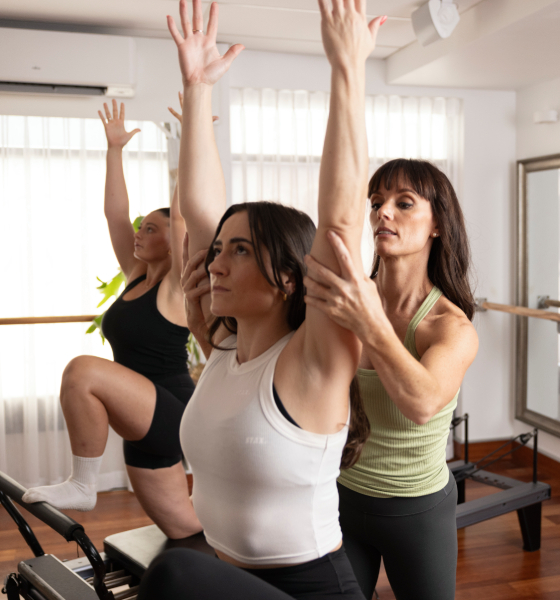
Hands-on Cues on the Classical Pilates Mat: Online Workshop
Develop a deeper understanding of tactile cueing and learn how carefully applied hands-on guidance can help students understand alignment, direction, opposition, organisation and movement intention.
This online Classical Pilates workshop is designed to help Pilates instructors build greater confidence, clarity and purpose in their tactile cueing.
Explore Hands-on Cues on the Classical Pilates Mat
Body Maestro Classical Pilates Mat Course
Study the traditional Classical Pilates Mat method in greater depth with Renee Scott and Body Maestro.
The complete Classical Pilates Mat Course is designed for Pilates instructors who want to understand the original work, develop their teaching skills and learn how the order, repetitions, breath, rhythm, imagery, powerhouse and transitions work together as one integrated system.
Explore the Body Maestro Classical Pilates Mat Course
The Exercises Are the Vocabulary
The magic of Classical Pilates Mat is not found in one exercise.
It is found in the relationship between every exercise.
The order progressively educates the body.
The repetition reveals your progress.
The breath connects the mind to the movement.
The rhythm keeps you present.
The transitions create efficiency and flow.
The powerhouse connects the body into one organised whole.
Over time, the Classical Pilates Mat sequence becomes familiar enough that you stop simply following the class and begin to understand, embody and inhabit the Pilates method.
The exercises are the vocabulary.
The order, rhythm, breath and transitions are the language.
Share this post
BECOME A CERTIFIED INSTRUCTOR IN PILATES AND BARRE
Get certified in Pilates or Barre through our Foundations Courses — flexible, empowering, and available online or in person. Created and led by renowned master instructor, Renee Scott.

Reformer Pilates Certification
Build solid Foundations and learn to teach Reformer Pilates with strength, clarity, and purpose.


Barre Certification
Get certified in Barre Attack and confidently teach high-energy classes that fuse Pilates, cardio, and ballet.

Join our continued education - Advanced Courses & {{Workshops}}